Return to: Medical School : Academic Health Center : myAHC : U of M Home

Gold University of Minnesota M. Skip to main content.University of Minnesota. Home page.
 
C.M.R.R.

What's inside.

Our Center

Research Highlights

Faculty & Staff

Magnets

Projects

Seminars

Downloads

Studies

Workshops

Classes

Safety

Contacts & Directions

Job Postings

Photo Gallery

Internal Links

Related Links

Site Map


CMRR Home

CMRR Webmail

 
Home > Faculty & Staff

Faculty and Staff

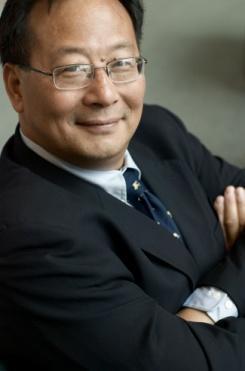
Jianyi Zhang, MD, Ph.D.

Professor of Medicine and Biomedical Engineering

jay [at] cmrr (dot) umn (dot) edu

RESEARCH AND SCHOLARSHIP           


a)         Myocardial Bioenergetics of Normal or Diseased Hearts: Magnetic Resonance Spectroscopy Research


The myocardial bioenergetics research program is based on Dr. Zhang’s laboratory (Lab) which is located in the Cardiology in conjunction with a lab at the Center for Magnetic Resonance Research (CMRR) located on the main campus


Following myocardial infarction, a prolonged period of LV remodeling with hemodynamic stability may be followed by the development of congestive heart failure (CHF). Hearts with stable remodeling or CHF have many abnormal bioenergetic characteristics, but whether limitations in the ATP synthetic or transport processes actually contribute to the transition from hemodynamic stability to CHF is unclear. Using 4.7 and 9.4 Tesla large bore magnets, the research program has been using porcine models of cardiac hypertrophy (pressure overload or postinfarction LV remodeling) in which a significant portion of the animals develop CHF.


The objectives are to: 1) use new techniques to define the rate limiting step(s) in the ATP synthesis/utilization processes that ultimately restrict maximal contractile performance and myocardial oxygen consumption (MVO2) in either normal or failing hearts; 2) examine in vivo spatially localized (from peri-scar to remote area, and from inner layer to outer layers of the left ventricle) myocardial high energy phosphates, ventricular contractile performance, blood flow, myoglobin saturation, and MVO2 under basal and maximal cardiac workstates in pigs with postinfarction LV remodeling, and during the transition from compensated hypertrophy to heart failure. The results of these experiments may lead to better preventive, diagnostic and therapeutic modalities for heart failure.


Dr. Zhang’s research includes active projects in:

1)               basic magnetic resonance spectroscopy (MRS) methodology and technique development,

2)                in the application of MR technology to study of cardiac biochemistry, and

3)               whole animal physiology.


The overall research goals of the myocardial bioenergetics research program are to:

      1. better understand the transmurally differentiated bioenergetic characteristics of normal left ventricle (LV) under basal and high cardiac workstates, how the myocardial oxidative phosphorylation is regulated.
      2.  To determine steady state myocardial oxidative phosphorylation rate in relation to myocardial perfusion and contractile performance.
      3. to determine whether bioenergetic abnormalities contribute to the transition from compensated hypertrophy to cardiac failure.


Ongoing research projects include studies of porcine models of heart failure, left ventricular hypertrophy secondary to pressure overload, or postinfarction LVremodeling.

 
The research program participants currently includes (other than the candidate): one M.D./Ph.D. student, one postdoctoral research fellow, one visiting scientist, as well as two research associates. Medical students, residents or cardiology fellows are trained based on their respective program.


b)         Molecular Cardiology Laboratory


            The Molecular Lab is located at the Cardiology Division and its goal is to further our understanding of the molecular details of energy metabolism related abnormal expression of genes and proteins in hearts with CHF. These gene and protein expression measurements in combination with the whole animal physiology and myocardial energetics profile measured earlier from the same animal, provide a unique integrated examination of the relationships between gene/protein expression level, myocardial energetics and systemic hemodynamics under the different cardiac workstates, and at the different phases of LV dysfunction. These studies aim to delineate the molecular and cellular details of myocardial dysfunction and to improve our understanding of the basic mechanisms of bioenergetics in failing heart, and hence would be expected to result in improved clinical care of the patients.


The research program participants currently includes (other than the candidate): one Ph.D. student from BME, IT, one research associate, and one resident (part-time).


c)         Cardiac Application of Cellular Therapy for Myocardial Repair


The Stem Cell Lab is located at cardiology division. Its goal is to use autologous bone marrow stem cells transplantation and high field NMR to follow cellular trafficking in stem cell therapy for myocardial repair. Following myocardial infarction, a prolonged period of LV remodeling with hemodynamic stability may be followed by the development of congestive heart failure (CHF). The recent reports indicate that myocardial environment of hearts with stable postinfarction LV remodeling is permissive to stem cells homing and differentiation. However, the mechanisms of which are not known and the reported beneficial effects of stem cell transplantation remain controversial.


Using high field large bore magnets, this study will use porcine models of cardiac hypertrophy (pressure overload or postinfarction LV remodeling) in which a significant portion of the animals develop CHF. The objectives are 1) to examine whether bone marrow stem cells (or circulating progenitors) transplantation can repair myocardial infarction and therefore prevent the occurrence of heart failure, 2) to examine whether the tagged stem cells with cardiac specific antibodies/compounds that can direct/promote cardiac “homing” of stem cells, 3) to examine whether MRI can monitor cell trafficking noninvasively in experiments that the annexin/monocristalline iron oxide nanoparticle (MION) antibody labeling will direct MSC to find their niches and localize to a specific organ, and 4) to examine a cell based gene therapy to increase cardiac neovascularization.


The coronary vein delivered autologous mesenchymal stem cells that are engineered to over express VEGF will not only stimulate angiogenesis, but also mobilize the endogenous stem cells to home into the diseased myocardium and increase the neovascularization.


This research program participants includes (other than the candidate): two PhD students from the BME department, one postdoctoral research fellow, and two research associates. Medical students, residents or cardiology fellows are trained based on their respective program.


Dr. Zhang focuses at least 50% of his time on research and scholarship activities.


SELECTED PEER-REVIEWED PUBLICATIONS ( Bold indicates the Correspondence and leading author)

Zhang J, Wilke N, Wang Y, Zhang Y, Wang C, Eijgelshoven MHJ, Cho YK, Murakami Y, Ugurbil K, Bache RJ, From AHL. Functional and bioenergetic consequences of post-infarction left ventricular remodeling in a new porcine model: an MRI and 31P MRS study. Circulation 1996; 94:1089-1099.

Ishibashi Y, Zhang J, Duncker DJ, Klassen C, Pavek T, Bache RJ. Coronary hyperperfusion augments myocardial oxygen consumption. Am J Physiol 1996; 271:H1384-H1393.

Ricchiuti V, Zhang J, Apple FS. Cardiac Troponin I and T alterations in hearts with severe LV remodeling. Clinical Chemistry 1997; 43:990-995.

Zhang J, Toher C, Erhard M, Zhang Y, Ugurbil K, Bache RJ, Lange T, Homans DC. Bioenergetic and functional consequences of left ventricular volume overload hypertrophy. Circulation 1997; 96:334-343.

Chen W, Zhang J, Eljgelshoven MHJ, Zhang Y, Zhu X-H, Wang C, Cho Y, Merkle H, Ugurbil K. Determination of deoxymyoglobin changes during graded myocardial ischemia: an in vivo 1H NMR spectroscopy study. Mag Res Med 1997; 38:193-197.

Chuong DH, Zhang J, Payne RM, Apple F. Post-infarction left ventricular remodeling induces changes in creatine kinase mRNA and protein subunit levels in porcine myocardium. Am J Pathol 1997; 151:257-264.

Zhang J, Merkle H, Bache RJ, From AHL, Ugurbil K. Myocardial bioenergetics during acute hibernation. Am J Physiology 1997; 273:H1452-1463.

Ishibashi Y, Duncker DJ, Zhang J, Bache RJ. ATP-sensitive K+ channel, adenosine and nitric oxide-mediated mechanisms account for coronary vasodilation during exercise. Circ Res 1998; 82:346-359.

Murakami Y, Zhang Y, Cho YK, Mansoor AM, Chung JK, Chu C, Francis G, Ugurbil K, Bache RJ, From AHL, Jerosch-Herold M, Wilke N, Zhang J. Myocardial oxygenation during high workstates in hearts with post-infarction remodeling. Circulation 1999; 99:942-948.

Murakami Y, Zhang J, Eijgelshoven MHJ, Chen W, Carlyle WC, Zhang Y, Gong G, Bache RJ. Myocardial creatine kinase kinetics in hearts with postinfarction left ventricular remodeling. Am J Physiol (Heart Circ Physiol 45) 1999; 276:H892-H900.

Zhang J, Murakami Y, Zhang Y, Cho YK, Ye Y, Gong G, Bache RJ, Ugurbil K, From AHL. Oxygen delivery does not limit cardiac performance during high work states. Am J Physiol 1999; 276 (Heart Circ Physiol 45):H50-H57.

Gong G, Ugurbil K, Zhang J. Transmural metabolic heterogeneity at high cardiac work states. Am J Physiol 1999; 277 (Heart Circ. Physiol. 46):H236-H242.

Bache RJ, Zhang J, Murakami Y, Zhang Y, Cho YK, Merkle H, Gong G, From AHL, Ugurbil K. Myocardial oxygenation at high work states in hearts with left ventricular hypertrophy. Cardiovasc Res 1999; 42:616-626.

Chen W, Cho Y, Merkle H, Ye Y, Zhang Y, Gong G, Zhang J, Ugurbil K. In vitro and in vivo studies of 1H NMR visibility to detect deoxyhemoglobin and deoxymyoglobin signals in myocardium. Magn Reson Med 1999; 42:1-5.

Liu H, Zhang J. An efficient MR phosphorous spectroscopic localization technique for studying ischemic heart. J Magn Reson Imaging 1999; 10892-10898.

Ning X-H, Zhang J, Liu J, Ye Y, Chen S-H, From AHL, Bache RJ. Signaling and expression for mitochondrial membrane proteins during left ventricular remodeling and contractile failure after myocardial infarction. J Am Coll Cardiol 2000; 36:282-287.

Zhang J, Ugurbil K, From AHL, Bache RJ. Myocardial oxygenation and high-energy phosphate levels during graded coronary hypoperfusion. Am J Physiol (Heart Circ Physiol) 2001; 280:H318-H326.

Cho YK, Merkle H, Zhang J, Tsekos NV, Bache RJ, Ugurbil K. Noninvasive measurements of transmural myocardial metabolites using 3D 31P NMR spectroscopy. Am J Physiol (Heart Circ Physiol) 2001; 280:H489-H497.

Ye Y, Gong G, Ochiai K, Liu J, Zhang J. High-energy phosphate metabolism and creatine kinase in failing hearts. Circulation 2001; 103:1570-1576.

Ye Y, Wang C, Zhang J, Cho YK, Gong G, Murakami Y, Bache RJ. Myocardial creatine kinase kinetics and isoform expression in hearts with severe left ventricular hypertrophy. Am J Physiol (Heart Circ Physiol) 2001; 281:H376-H386.

Chen Y, Traverse JH, Zhang J, Bache RJ. Selective blockade of mitochondrial KATP channels does not impair myocardial oxygen consumption. Am J Physiol (Heart Circ Physiol) 2001; 281:H738-H744.

Liu J, Wang C, Murakami Y, Gong G, Ishibashi Y, Prody C, Ochiai K, Bache RJ, Godinot C, Zhang J. Mitochondrial ATPase and high energy phosphates in failing hearts. Am J Physiol (Heart Circ Physiol) 2001; 281:H1319-1326.

Ochiai K, Zhang J, Gong G, Zhang Y, Liu J, Ye Y, Wu X, Liu H, Murakami Y, Bache RJ, Ugurbil K, From AHL. Effects of augmented delivery of pyruvate on myocardial high energy phosphate metabolism at high work state. Am J Physiol 2001;281(4):H1823-32.

Park SJ, Zhang J, Ye Y, Ormaza S, Liang P, Bank AJ, Miller LW, Bache RJ.  Myocardial creatine kinase expression after left ventricular assist device support.  J Am Coll Card 2002;39:1773-1779.

Murakami Y, Wu X, Zhang J, Ochiai K, Bache R, Shimada T.  Nicorandil improves myocardial high-energy phosphates in postinfarction porcine hearts. Clin Exp Pharm Phys 2002;29:639-645.

Gong G, Liu J, Liang P, Guo T, Hu Q, Ochiai K, Hou M, Ye Y, Wu X, Mansoor A, From AHL, Ugurbil K, Bache RJ, Zhang J.  Oxidative capacity in failing hearts.  Am J Physiol 2003 285(2):H541-8.

Zhang J, Ugurbil K, From AHL, Bache RJ.  Myocardial Oxygenation and High Energy Phosphate Levels During KATP Channel Blockade.  Am J Physiol Heart Circ Physiol 2003;285:H1420-H1427.

Gourine A, Hu Q, Sander P, Kuzmin A, Hanafy N, Davydova S, Zaretsky D, Zhang J.  Interstitial purine metabolites in hearts with LV remodeling.  Am J Physiol Heart Circ Physiol 2004;286:H677-H684.

Zhang J, Narula J.  Molecular biology of myocardial recovery.  Surg Clin N Am 2004 (In Press).

Liu J, Hu Q, Wang ZL, Xu C, Gong G, Mansoor A, Hou M, Zeng L, Zhang JR, Jerosch-Herold M, Guo T, Bache RJ, Zhang J.  Autologous stem cell therapy in myocardial infarcts. Am J Physiol 2004 (in press).
 
The University of Minnesota is an equal opportunity educator and employer.